


Painting
Where Dreams Go

Story
One day, I encountered a white elephant in a dream.
In Buddhist tradition, there is a story known as the “Dream of Conception,” in which Queen Māyā, the mother of the Buddha, dreams of a white elephant with six tusks. After this dream, she conceives the child who would later become the Buddha. The six-tusked white elephant has also been associated with the Six Pāramitās and the purification of the six senses, and is traditionally depicted as the mount of Samantabhadra Bodhisattva.
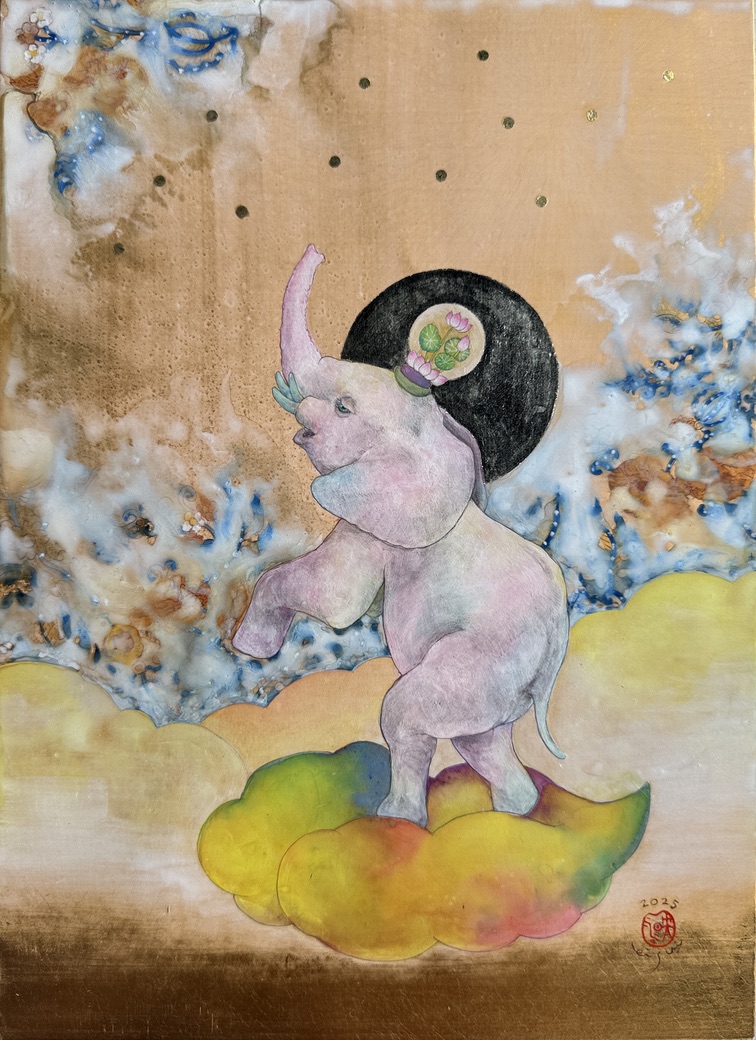
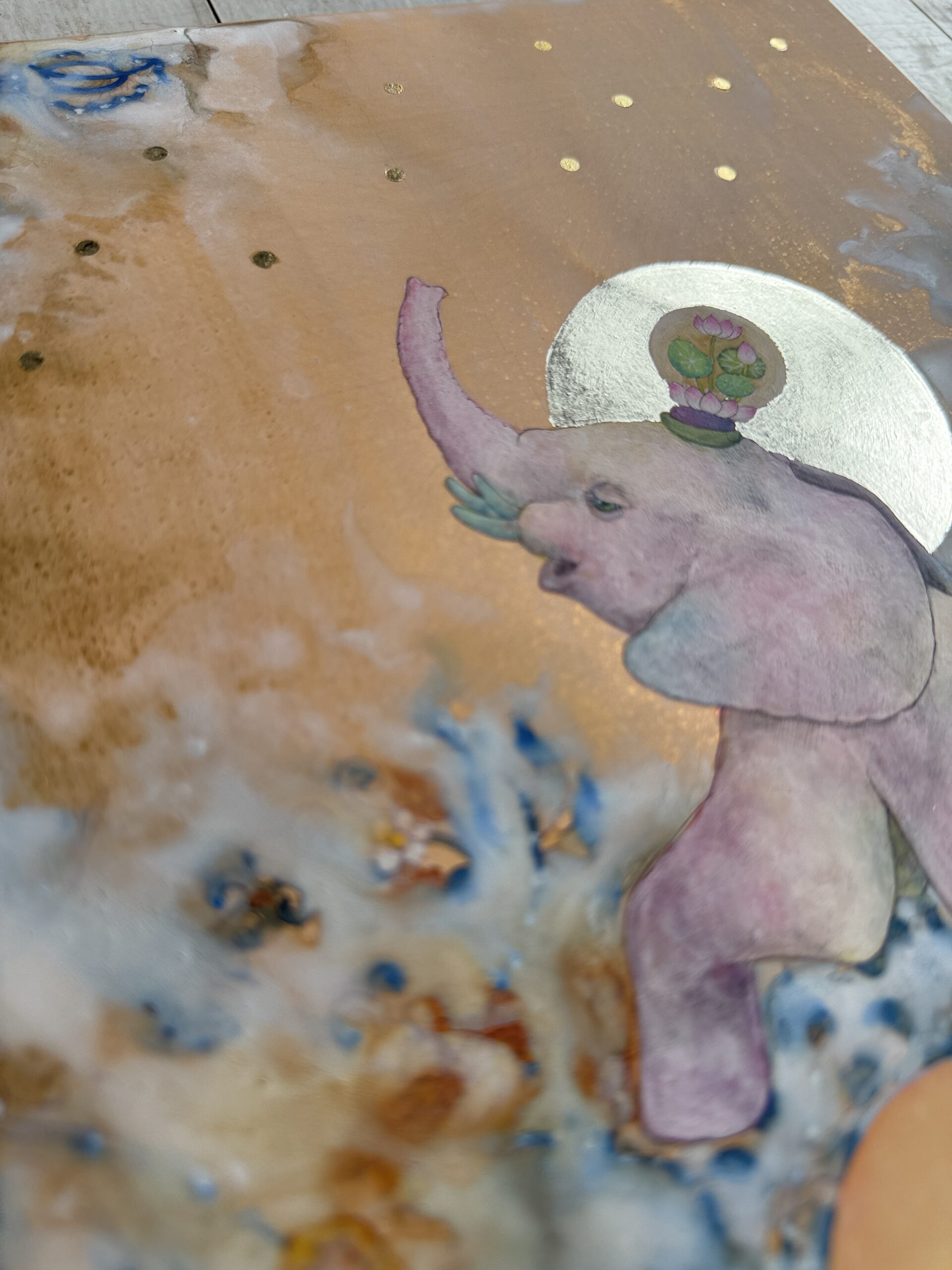
The six-tusked white elephant I painted, however, is not a majestic, imposing creature.
It is a small and endearing white elephant calf.
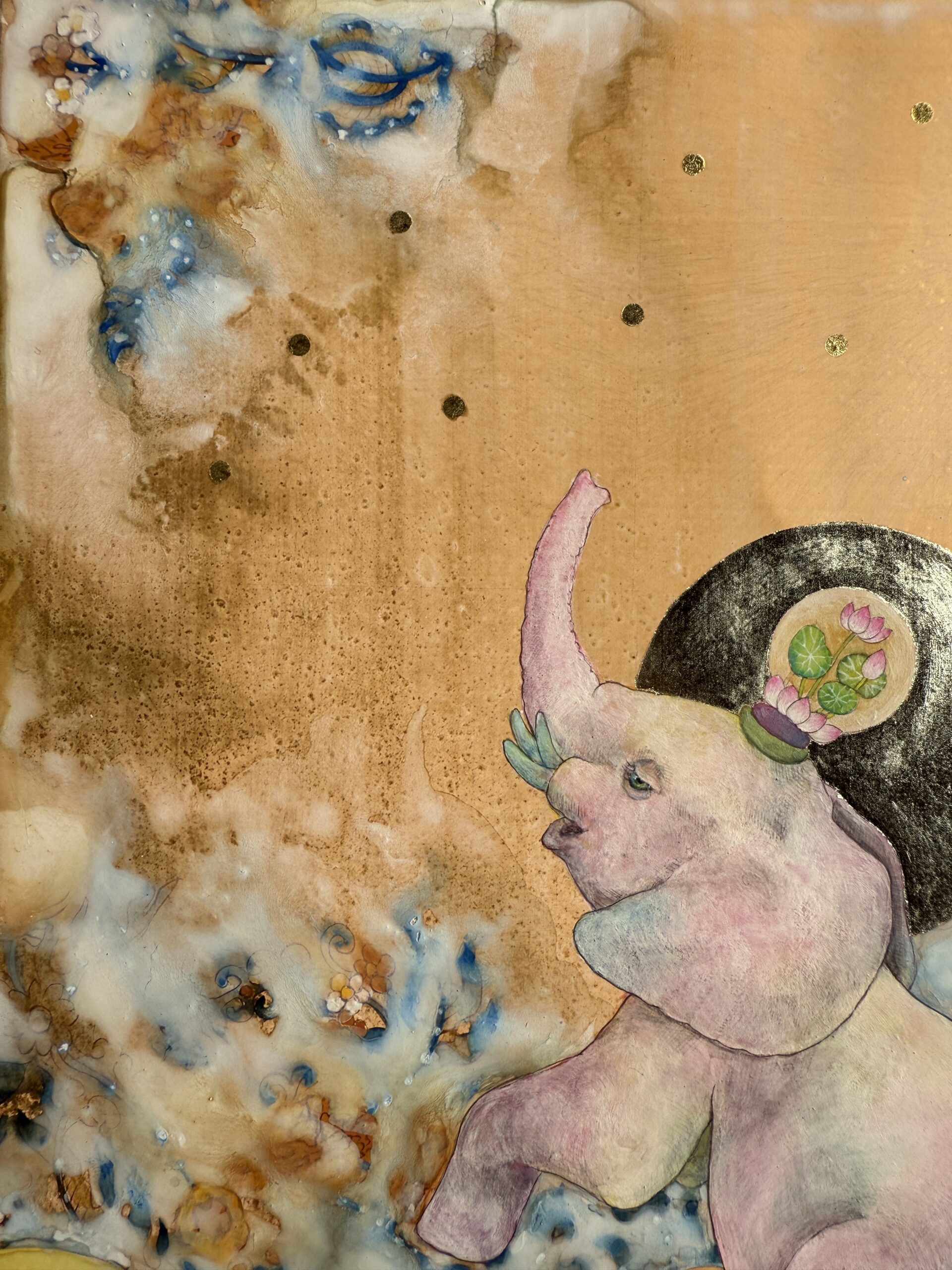
Wearing a crown of lotus blossoms upon its head, it floats gently through the world on iridescent clouds.
The little elephant has one purpose:
to visit someone in a dream and deliver an important message.
And yet, it never speaks.
Whatever a person receives from an encounter with the white elephant—and whatever meaning they discover within it—is entirely up to them.
Looking back, I realize that the dream in which I encountered the white elephant came at a major turning point in my own life.
At the time, I did not understand what the dream was trying to tell me. But the entire scene shimmered with light, and I felt as though something deeply important had been delivered to me. As soon as I awoke, I made a sketch of what I had seen so that I would not forget it.
More than twenty years have passed since then.
After experiencing so much in my own life, I finally arrived at this work.
Perhaps the message carried by the white elephant is not meant to give us an answer, but to awaken us to something that has already been quietly waiting within us.
And even today, the little six-tusked white elephant may still be floating gently upon its iridescent clouds, traveling onward to deliver its next message to someone, somewhere.
In Buddhist tradition, there is a story known as the “Dream of Conception,” in which Queen Māyā, the mother of the Buddha, dreams of a white elephant with six tusks. After this dream, she conceives the child who would later become the Buddha. The six-tusked white elephant has also been associated with the Six Pāramitās and the purification of the six senses, and is traditionally depicted as the mount of Samantabhadra Bodhisattva.
The six-tusked white elephant I painted, however, is not a majestic, imposing creature.
It is a small and endearing white elephant calf.
Wearing a crown of lotus blossoms upon its head, it floats gently through the world on iridescent clouds.
The little elephant has one purpose:
to visit someone in a dream and deliver an important message.
And yet, it never speaks.
Whatever a person receives from an encounter with the white elephant—and whatever meaning they discover within it—is entirely up to them.
Looking back, I realize that the dream in which I encountered the white elephant came at a major turning point in my own life.
At the time, I did not understand what the dream was trying to tell me. But the entire scene shimmered with light, and I felt as though something deeply important had been delivered to me. As soon as I awoke, I made a sketch of what I had seen so that I would not forget it.
More than twenty years have passed since then.
After experiencing so much in my own life, I finally arrived at this work.
Perhaps the message carried by the white elephant is not meant to give us an answer, but to awaken us to something that has already been quietly waiting within us.
And even today, the little six-tusked white elephant may still be floating gently upon its iridescent clouds, traveling onward to deliver its next message to someone, somewhere.
Summary
夢の行方
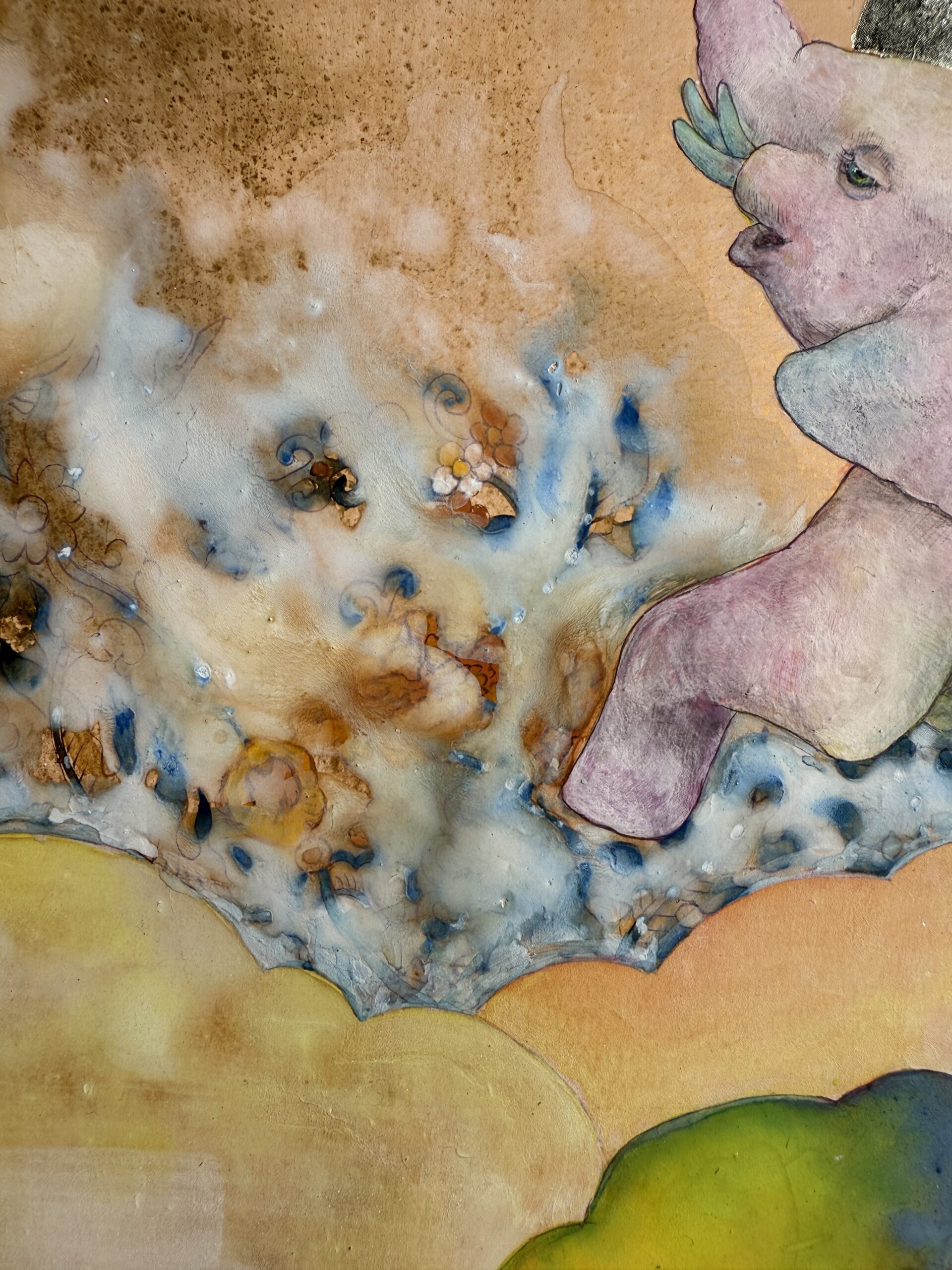
Materials: Panel, metal-leaf paper, white soil, Japanese Nerienogu paints, acrylic emulsion, mineral pigments, gold leaf, Suikin gold leaf
Size: F4
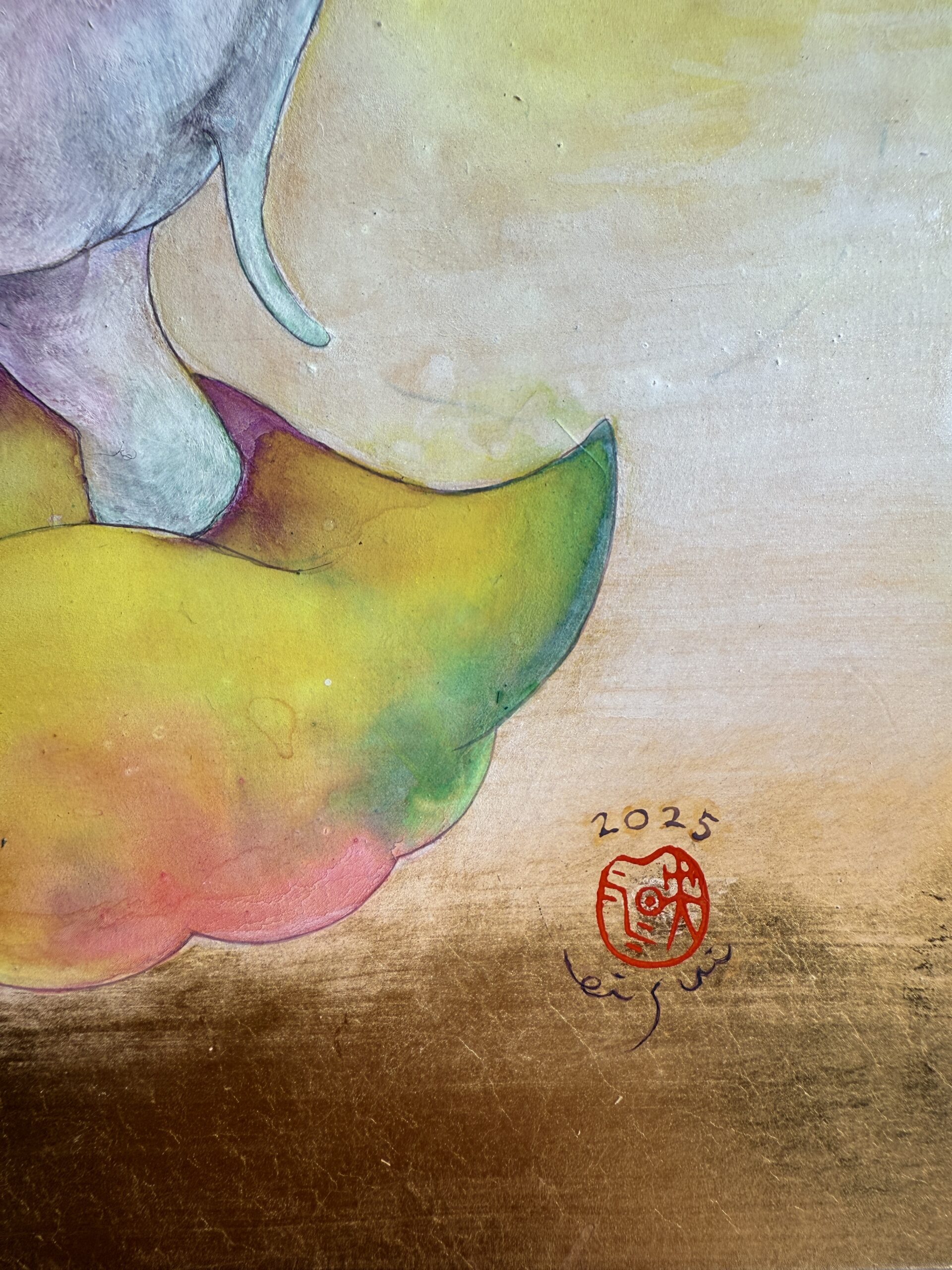
Year: 2025
Collection: Private Collection(Istanbul)
It is also being sent out here. Please take a look.


Please contact us by Email.
Please feel free to contact us for more information about our activities and works.