


Painting
Tōryu Mon (The Gateway to Success)




Story
The carp looked up at the waterfall, burning with determination.
Clenching its fist tightly, it told itself, “I will climb this waterfall. I will not lose to anyone.”
Three years have passed.
The carp is still swimming through that same waterfall.
The climb remains as long and difficult as ever.
But something within the carp has changed.
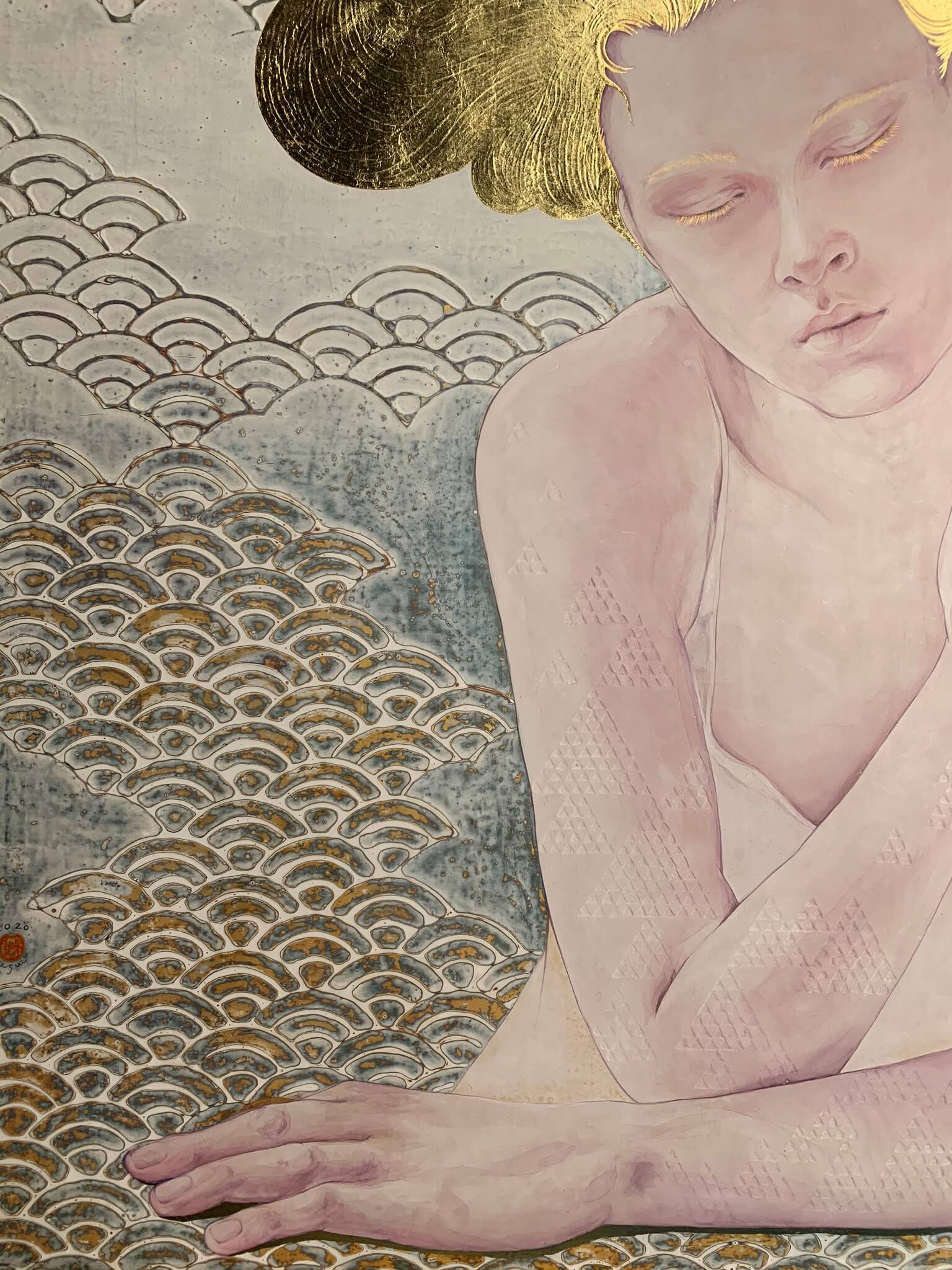
The fist that was once clenched tightly has opened. One hand now takes the form of a contemplative gesture, expressing deep reflection.
Its gaze is no longer directed outward, but inward.
The violent rush of the waterfall and the other carp climbing alongside it have faded from its awareness.
In the midst of stillness, the carp continues to climb, quietly questioning itself.
Why am I climbing this waterfall?
If I reach the top and become a dragon, will I truly be satisfied?
I didn’t want to lose.
I wanted to be recognized.
I wanted someone to listen to me.
That was why I thought I had begun this climb.
But somewhere along the way, the carp realized something.
It had begun climbing the waterfall in order to become a dragon.
And yet, what it had truly longed for was not to become a dragon at all, but **this very moment—the time spent swimming through the waterfall itself.**
I want to keep swimming forever.
To realize that this is the happiness I had been searching for—
that realization itself makes me happy.
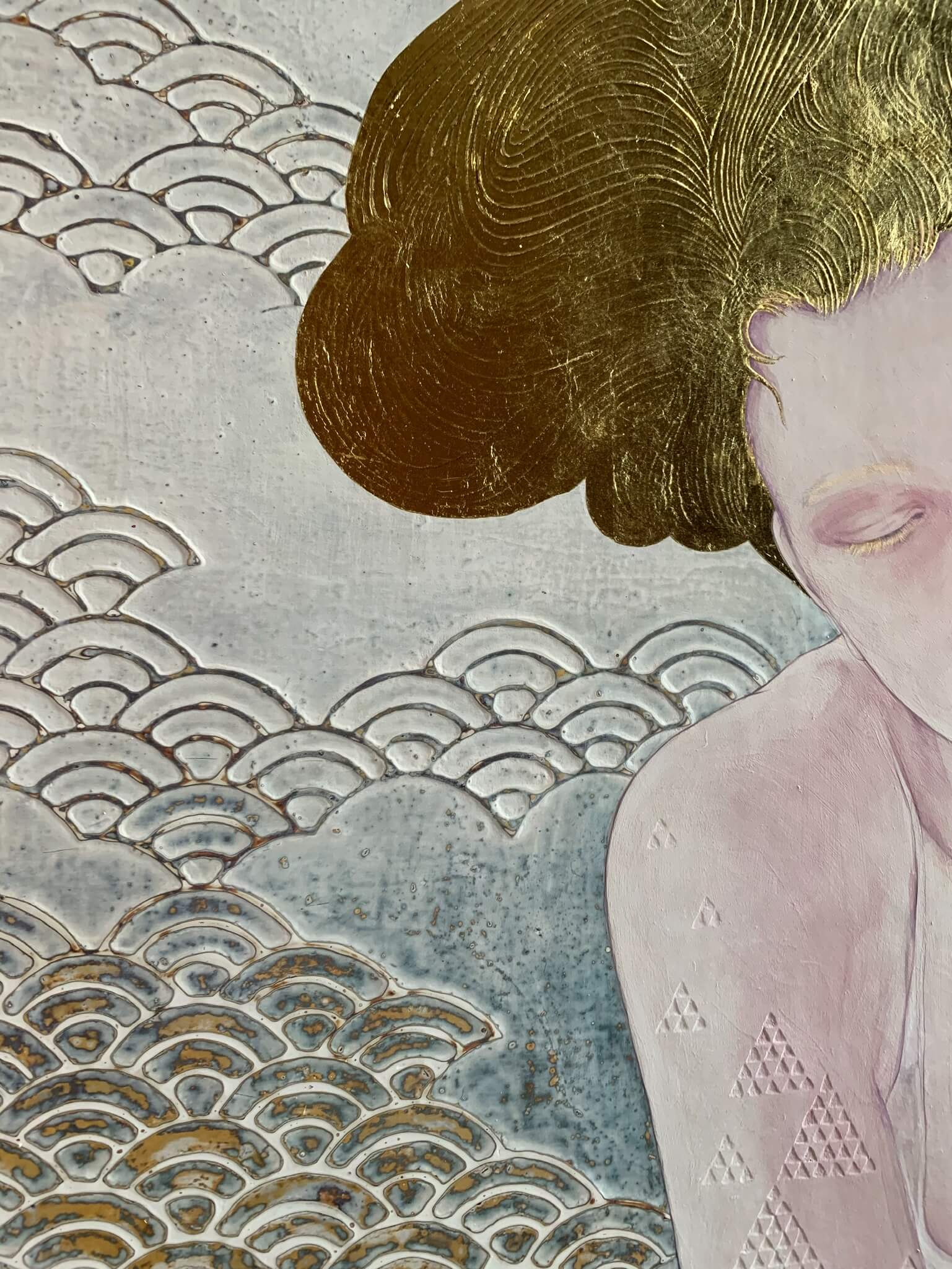
The background is filled with a traditional Japanese wave pattern called *Seigaiha*, composed of waves that continue endlessly.
Evoking the vastness of the sea, this pattern has long carried wishes for a peaceful life and for happiness that continues far into the future.
In this work, those never-ending waves also reflect the passage of time through which the carp continues to swim.
The pattern inscribed across the body is called *Uroko-mon*, or the scale pattern.
Made from repeating triangles, it evokes the scales of creatures such as snakes. Because of their ability to shed their skin, the pattern has long been associated with casting off misfortune, renewal, and rebirth.
As the carp climbed the waterfall, it was not its form that changed, but its heart.
The destination is still far away.
And yet, perhaps happiness is not found only in reaching somewhere.
Perhaps the time we spend moving forward—questioning, reflecting, and changing along the way—is itself what it means to live.
Summary
Tōryu Mon (The Gateway to Success)
“Tōryu Mon (The Gateway to Success)”
Media: Wood panel, soil, Kōsai (Japanese tube paint), acrylic emulsion, and gold leaf,silver leaf
Size: P30
Year: 2020
Grand Prix Winner, Nihon no Bijutsu 2020
It is also being sent out here. Please take a look.


Please contact us by Email.
Please feel free to contact us for more information about our activities and works.